
COVID-19: How do the EU and US responses stack up against one another? -Lars Halverson
- Brussels Crew

- Mar 27, 2020
- 3 min read
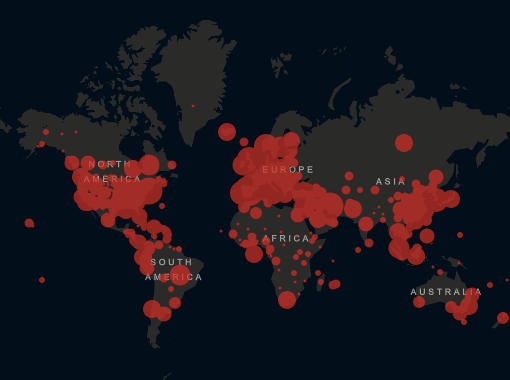
Photo From Johns Hopkins GIS Dashboard
COVID-19 has dominated mainstream headlines for the last several weeks, and many other financial and economic headlines for the last two months. The world economy has slowed to a standstill and this hard stop will undoubtedly have drastic effects on the lives of everyday people globally that we do not fully understand nor anticipate. The United States has been criticized heavily for its response to the virus, but has its response really been slow when compared to that of other nations? How trustworthy are respective national figures of those infected and in critical condition? To attempt to answer these questions, first we have to reconcile with the fact that there is much that we do not know and cannot know currently, rendering them impossible to answer. Without transparent global cooperation from all governments and the capacity to test, individuals do not have the information to be pointing fingers. So, has the United States made a concerted effort to reduce the spread and economic fallout of the virus in a timely manner compared Europe? Let’s discuss.
The first known case of the coronavirus in Europe tested positive in France on January 24th and both France and Germany held the most cases within their borders until the massive breakout in northern Italy (primarily due to 100,000 migrant workers from Wuhan working in apparel manufacturing). Due to unrestricted movement of people within the Schengen area of Europe, the spread of the virus progressed quite quickly and was aided by the long 14 -day asymptomatic period after initial infection. In addition to this silent spreading, the virus has a RO of 2.6, meaning the average infected person will infect 2.6 other individuals. This can be compared to the 1.6 RO of the already considered highly infectious H1N1(swine flu). The coupling of all these factors has caused Europe to be labeled the new epicenter of the virus and travel to and from the United States and Europe has been banned. Before I left the country, I personally saw limited action from the people of Brussels to keep themselves healthy and observed little to no guidance from the Belgian government to people. Every day I would check the exponential growth of cases in several countries across Europe and the United States and little to no action would be taken. I would ride the metro to and from work and ponder the transmission that could be occurring right under everyone’s noses (literally). Too little, too late. This will be the phrase people will use when the world response to Coronavirus is discussed in the future.
Now the immense viral spread has caused municipal governments in the US and Europe to enact stringent “stay at home” ordinances but the only nationwide lockdown being enforced is in Italy. The United States Federal has announced it will issue a $2 Trillion-dollar stimulus to combat the economic effects of the virus for a country of 331 million people. European central bank chief Christine Lagarde has indicated that a stimulus of €750 billion ($828 million) for the entire EU population of 512 million people. Nearly 3.4 million people have claimed unemployment this week alone in the united states so this stimulus will be coming at a great time. From a health perspective the answer to my original question is ambiguous, but economically the EU could be doing much more for its citizens as small and medium sized business will surely fail in the wake of this pandemic.
Please stay safe, sane and well informed; more to come next week!



Comments