
Desired Skills: Learnability in Belgium
- Marley Whittle

- Apr 21, 2020
- 3 min read
In my previous post, I discussed the role ambiguity played in my internship at the European parliament. This post I wanted to focus on two major differences I observed between other desired skills in Europe and the United States outside of this course. My internship with the European Parliament taught me that learnability and multilingualism were key skills needed for a future career in Brussels. Adversely, my experience in the U.S. taught me that flexibility is more appealing to US companies.
In EU institutions, being multilingual is a crucial and expected skill. Most EU traineeships require you to have a high level of at least French or English plus one other European language. The more fluent you are in both the Secretariat Languages, French and English, the easier your work will be once you begin your internship. Having only three semesters of German under my belt over a year ago, my dwindling language skills did not help me working for a Maltese office. The most evident example of the language barrier was when I attended a more informal meeting about proposed amendments for the 2021-2027 MultiFinancial Framework and the meeting was mostly in French. Everyone in the room was able to effortlessly switch from English to French, leaving me frantically google translating bits and pieces of the meeting. This was an instance where I was challenged with working with ambiguity and needed to find innovative ways to complete the task at hand.
Adjusting to a new country is a difficult task for anyone. Adjusting to a new internship in a new political system was a daunting task for me. I had never taken a class about the European Union and rarely discussed it in my university classes prior to studying abroad. Learnability is a skill that is important in the changing environment of the 21st century. I needed to learn and relearn about the EU to understand how the work I was doing would be meaningful. Throughout my two months working at the European Parliament, I learned how to write and submit parliamentary questions. Before my internship, I had never heard of Parliamentary questions, the U.S. government does not do anything similar to it. Parliamentary questions are questions posed by MEPs to other institutions or entities of the European Union, serving as the primary type of legislative oversight over other EU institutions. Understanding how I fit into this larger institutional framework meant I needed to learn and relearn how my office liked forms and paperwork to be done so I could successfully contribute to the office. Working with this ambiguity definitely sharpened my verbal skills and learnability.
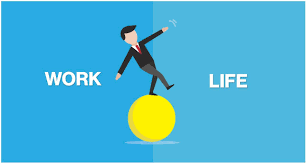
If you work past sunset most days or neglect to use your vacation time, you’re probably American. In American institutions, flexibility is an expected skill most bosses look for when hiring employees. Offering to come in early or stay late can make or break your ability to grow in an office. In Europe, hard work is expected, but bosses are not as adamant about staying extra in the office. A Gallup report from 2014 estimated that the average full-time worker in the United States works 47 hours a week, one of the highest in the world. A recent study shows that the long work week is partially due to the fact that the US has no limitations on the number of hours an individual can work, like many European countries, and does not guarantee its workers paid vacation. While Americans are hard-working, their flexibility to work long hours is in stark contrast to the European labor force.
Reflecting on the desired skills in Brussels vs the U.S. revealed how unhealthy American work habits truly are. The desired skills in the European Parliament, multilinguistic and learnability, made sense for the institution because there are 26 member states who cannot all rely on English to conduct business. One of my biggest missed opportunities while abroad was not learning French, which I know would have helped me in my workplace as well as in daily interactions. It was eye-opening to see how my bosses and coworkers were not expected to work long hours, but still got all of their work done in a timely manner.
I am not advocating for an overhaul in U.S. labor laws, but American business and employees can learn from European countries when it comes to desired skills and creating a work-life balance focused on the employee’s learning as well as the company’s goals.


Comments